
Forklift Manual: A Comprehensive Guide
This manual details essential forklift upkeep, including inspections, fluid checks, battery care, and troubleshooting—vital for safe, productive operation and longevity.
Forklift operation demands rigorous adherence to safety protocols. This section introduces fundamental principles for safe and efficient forklift use, emphasizing operator training and awareness. Understanding load capacity, stability factors, and proper driving techniques are paramount. Regular maintenance, as outlined in this manual, directly contributes to operational safety. Prioritize pre-operational inspections – checking steering, brakes, acceleration, deceleration, and hydraulic controls – to identify potential hazards. Always secure loads correctly, and be mindful of pedestrian traffic. Following these guidelines minimizes risks and ensures a secure working environment, extending the forklift’s lifespan and preventing costly incidents.
Understanding Forklift Types
Forklifts are diverse, categorized by power source and design. Common types include internal combustion (IC) forklifts – gasoline, LPG, or diesel – suited for outdoor use; Electric forklifts, ideal for indoor environments, offer zero emissions and quieter operation. Reach trucks excel in narrow aisle applications, while pallet jacks facilitate horizontal material movement. Counterbalance forklifts, the most prevalent, provide stability through rear weight. Selecting the appropriate forklift depends on load weight, lift height, operating environment, and aisle width. Understanding these distinctions ensures optimal performance, efficiency, and safety for specific operational needs.

Essential Daily Forklift Inspections
Prior to each shift, a thorough inspection is crucial for safety and preventing breakdowns. Check fluid levels – oil, coolant, hydraulic fluid – for proper readings. Inspect tires for damage and ensure correct pressure. Examine forks for cracks or wear, and verify mast chain and roller functionality. Test brakes, steering, and horn operation. Confirm safety features like seatbelts and lights are working correctly. Document any discrepancies immediately and report them for repair. Consistent daily inspections minimize risks and maximize forklift uptime, ensuring a safe working environment.
Fluid Level Checks and Maintenance
Maintaining correct fluid levels is paramount for optimal forklift performance and longevity. Regularly check engine oil, hydraulic fluid, and coolant levels, topping off as needed with the manufacturer’s recommended type. Inspect fluids for contamination or discoloration, indicating potential issues. Schedule periodic fluid changes based on operating hours or calendar intervals. Proper fluid maintenance prevents component wear, overheating, and hydraulic system failures. Always dispose of used fluids responsibly, following environmental regulations. Consistent monitoring and timely maintenance ensure reliable operation and minimize costly repairs.
Engine Oil Inspection and Replacement
Regular engine oil checks are crucial for internal combustion forklifts. Inspect the oil level using the dipstick, ensuring it falls within the designated range. Examine the oil’s color and consistency; dark, gritty oil indicates contamination and the need for replacement. Follow the manufacturer’s recommended oil change interval, typically based on operating hours. Proper oil replacement involves draining the old oil, replacing the oil filter, and refilling with the correct oil type and quantity. This prevents engine wear, maintains optimal lubrication, and extends engine life.
Hydraulic Fluid Level and Condition
Maintaining proper hydraulic fluid levels is vital for smooth forklift operation. Check the fluid reservoir sight glass, ensuring the level is within the marked range when the mast is lowered. Inspect the fluid’s color; it should be clear or slightly amber. Dark or cloudy fluid indicates contamination. Regularly check for leaks around hoses, cylinders, and the reservoir. Use the manufacturer’s specified hydraulic fluid type. Contaminated or low fluid can cause sluggish operation, reduced lifting capacity, and potential damage to hydraulic components.
Coolant Level and Type
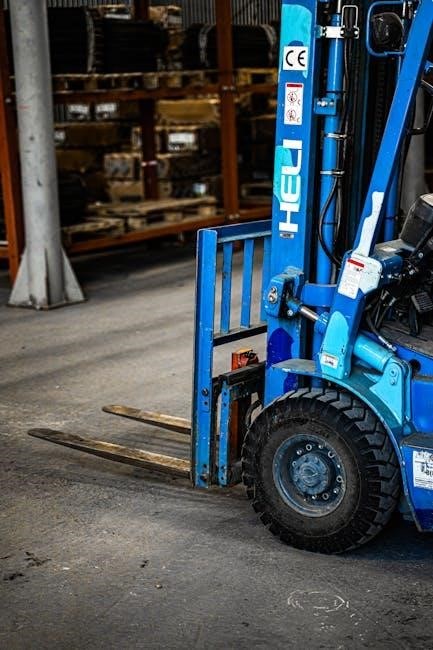
Maintaining the correct coolant level is crucial for preventing engine overheating. Check the coolant reservoir when the engine is cold, ensuring the level is between the “min” and “max” marks. Always use the coolant type specified in your forklift’s manual – mixing types can cause corrosion and reduce cooling efficiency. Inspect the coolant for clarity; discolored or rusty coolant indicates contamination. Regularly check for leaks around the radiator, hoses, and water pump. Low coolant levels can lead to engine damage and costly repairs.
Battery Maintenance for Electric Forklifts
Electric forklift batteries require specific care to maximize lifespan and performance. Regular maintenance includes keeping the battery clean and dry, inspecting cables for damage, and ensuring proper ventilation during charging. Follow the manufacturer’s charging procedures meticulously – overcharging or undercharging can significantly reduce battery capacity. Always wear appropriate personal protective equipment when handling batteries, as they contain corrosive acid. Proper battery maintenance ensures reliable operation and minimizes the risk of unexpected downtime.
Battery Charging Procedures

Proper charging is crucial for electric forklift battery health. Always charge batteries in a well-ventilated area, wearing safety glasses and gloves. Connect the charger to the battery before plugging it into the power source. Utilize the correct charger setting for the specific battery type; Avoid opportunity charging – allow the battery to discharge to a reasonable level before recharging. Once charged, disconnect the power source before disconnecting the charger from the battery. Following these procedures extends battery life and ensures safe operation.
Electrolyte Level Checks
Regularly checking electrolyte levels in lead-acid batteries is vital. After a full charge, carefully inspect each cell, ensuring the liquid covers the plates. Distilled water should be used to top off cells – never tap water! Avoid overfilling, as this can cause leakage and corrosion. Wear appropriate personal protective equipment, including safety glasses and gloves, during this process. Low electrolyte levels indicate potential issues requiring immediate attention, impacting battery performance and lifespan. Consistent monitoring prevents damage and ensures optimal functionality.
Battery Safety Precautions
Electric forklift batteries produce flammable and explosive hydrogen gas during charging. Ensure adequate ventilation in the charging area to prevent accumulation. Always wear safety glasses and gloves when handling batteries and connecting/disconnecting chargers. Avoid creating sparks or open flames near batteries. Never smoke in the charging area! Properly dispose of damaged or leaking batteries according to local regulations. Regularly inspect cables and connectors for damage. Following these precautions minimizes risks and ensures a safe working environment.
Forklift Steering System Maintenance
Regular inspection of the steering linkage is crucial for safe operation. Check for loose connections, worn ball joints, and damaged tie rod ends. Smooth and precise steering movement indicates a healthy system; any stiffness or play requires immediate attention. For forklifts equipped with power steering, verify the fluid level and condition – low fluid can cause erratic steering. Inspect hoses for leaks or cracks. Maintaining the steering system ensures responsive control and prevents accidents, contributing to overall forklift safety and efficiency.
Steering Linkage Inspection
A thorough steering linkage inspection begins with visually examining all components. Look closely for any signs of damage, such as bent or cracked parts, and corrosion. Carefully check all connections – bolts and nuts – ensuring they are securely tightened. Test for play in the linkage by attempting to move components by hand; excessive movement indicates wear. Pay particular attention to ball joints and tie rod ends, as these are common wear points. Proper linkage maintenance guarantees responsive steering and prevents potentially dangerous operational issues.
Power Steering Fluid Checks (if applicable)
For forklifts equipped with power steering, regular fluid checks are crucial. Locate the power steering reservoir, typically labeled, and inspect the fluid level while the forklift is stationary. The level should fall within the “min” and “max” markings. Also, assess the fluid’s condition – it should be clear and free of contaminants. Dark or cloudy fluid indicates potential issues. If low, top up with the manufacturer’s recommended fluid type. Leaks in the system should be addressed immediately to maintain steering responsiveness and prevent damage.
Brake System Maintenance
A fully functional brake system is paramount for forklift safety. Regular maintenance includes thorough inspections of brake pads for wear and tear, replacing them when they reach their minimum thickness. Check brake fluid levels and condition; it should be at the proper level and free from contamination. Inspect brake lines and hoses for leaks or damage. Test the parking brake’s holding capacity, especially on inclines. Smooth and prompt brake response during testing indicates a healthy system. Address any issues immediately to prevent accidents and ensure operational reliability.
Brake Pad Inspection and Replacement
Regularly inspect brake pads for sufficient material; worn pads compromise stopping power. Measure pad thickness – replace when reaching the manufacturer’s minimum specification. Look for uneven wear, indicating potential issues with calipers or rotors. During replacement, ensure proper bedding-in procedures are followed for optimal performance. Always use the correct brake pad type for your forklift model. Discard worn pads responsibly. A thorough inspection should also include checking the brake rotors for scoring or damage, which may necessitate rotor resurfacing or replacement.

Brake Fluid Level and Condition
Maintain proper brake fluid levels for optimal braking performance; low fluid can introduce air into the system. Regularly check the fluid reservoir, adding fluid as needed, using the manufacturer’s specified type. Inspect the fluid’s color – dark or cloudy fluid indicates contamination and requires flushing. Contamination reduces braking efficiency and can damage components. Always bleed the brake lines after opening the system to remove air. Ensure the reservoir cap seals tightly to prevent moisture ingress, which degrades fluid quality. Prioritize fluid changes per the maintenance schedule.
Mast and Fork Maintenance
Regularly inspect forks for cracks, bends, and excessive wear, replacing damaged forks immediately to prevent load instability. Examine the mast chains and rollers for proper lubrication, tension, and wear. Ensure smooth chain movement and replace worn rollers promptly. Check mast uprights for any signs of bending or damage. Lubricate all mast pivot points as specified in the maintenance schedule. Verify proper operation of side shift and fork positioning mechanisms. A well-maintained mast and fork assembly is crucial for safe and efficient lifting operations.
Fork Inspection for Cracks and Wear
Thoroughly inspect forks at the heel, mounting points, and along their length for any cracks, bends, or signs of wear. Utilize visual inspection and, if available, magnetic particle or dye penetrant testing to detect hidden flaws. Pay close attention to areas subjected to high stress. Measure fork thickness to ensure it meets manufacturer’s specifications. Replace any fork exhibiting cracks, significant wear, or deformation immediately. Document all inspections and replacements in the maintenance log. Compromised forks pose a serious safety hazard.
Mast Chain and Roller Inspection
Regularly inspect the mast chain for wear, damage, and proper lubrication. Check for stretched links, broken pins, and corrosion. Ensure the chain moves freely through the mast rollers. Examine rollers for wear, cracks, and smooth rotation. Replace worn chains and rollers promptly to maintain lifting capacity and prevent mast instability. Proper chain tension is crucial; adjust according to the manufacturer’s guidelines. Document all inspections, adjustments, and replacements in the maintenance log. A faulty mast chain or rollers can lead to catastrophic failure.
Tire Maintenance and Pressure
Maintaining correct tire pressure is vital for forklift stability and performance. Regularly check tire pressure using a calibrated gauge, adhering to the manufacturer’s specifications found in the forklift manual. Inspect tires for cuts, bulges, and uneven wear. Replace damaged tires immediately. Proper inflation reduces rolling resistance, improving energy efficiency. For solid tires, inspect for chunking and flat spots. Pneumatic tires require more frequent checks. Document tire pressure readings and any observed damage in the maintenance log to ensure ongoing safety and operational effectiveness.
Preventative Maintenance Schedules
Establishing a routine preventative maintenance schedule maximizes forklift lifespan and minimizes downtime. Implement 30-day checks encompassing fluid levels, visual inspections, and basic functionality tests. Expand to 90-day schedules including more detailed component assessments like brake systems and steering. Annual maintenance should involve comprehensive inspections of all critical systems – engine, hydraulics, mast, and safety features. Consistent adherence to these schedules, documented in maintenance logs, ensures optimal performance, identifies potential issues early, and reduces costly repairs, ultimately boosting operational efficiency.
30-Day Maintenance Checklist
This checklist focuses on quick, routine checks for consistent performance. Verify engine oil, hydraulic fluid, and coolant levels, noting any leaks. Inspect tires for wear and proper pressure. Test steering for smooth operation and responsiveness. Confirm brake functionality – response time and effectiveness. Perform a power-on test, ensuring all systems engage correctly. Check for loose bolts or damaged wiring. Document all findings. This frequent assessment identifies minor issues before they escalate, maintaining safety and preventing costly downtime, contributing to overall operational efficiency.
90-Day Maintenance Checklist
This checklist expands upon the 30-day review, adding more detailed inspections. Alongside fluid level checks and tire assessments, thoroughly inspect the mast and forks for cracks or wear. Examine mast chains and rollers for proper lubrication and tension. Evaluate steering linkage for any play or damage. Test the parking brake’s holding capacity under load. Conduct acceleration and deceleration tests, noting any irregularities. Review hydraulic controls for smooth, precise operation. Document all observations and address any identified concerns promptly to ensure continued safe and reliable performance.
Annual Maintenance Checklist
The annual checklist represents a comprehensive overhaul, ensuring long-term forklift health. Beyond all previous checks, a professional should inspect the entire electrical system, including wiring and connections. A detailed engine or motor assessment is crucial, potentially including compression tests. Thoroughly examine the brake system, replacing pads and flushing the fluid. Inspect all hoses and lines for leaks or deterioration. Evaluate the overall structural integrity of the forklift. Document all findings and repairs meticulously, maintaining a complete maintenance history for optimal performance and safety.
Troubleshooting Common Forklift Issues
Effective troubleshooting minimizes downtime and ensures operational efficiency. If the forklift won’t start, check the battery connections, fuel levels, and ignition system. Hydraulic system problems often stem from low fluid levels, leaks, or pump failures – inspect hoses and connections. Address unusual noises promptly, as they can indicate mechanical issues. Overheating may signal coolant problems or a faulty radiator. Always consult the full manual for specific error codes and diagnostic procedures before attempting complex repairs, prioritizing safety and proper diagnosis.
Forklift Won’t Start
A forklift failing to start requires systematic diagnosis. First, verify the battery charge and connections – corrosion can be a culprit. Check the fuel level for internal combustion models, and ensure the fuel shut-off valve is open. Inspect the ignition switch and starter solenoid. For electric forklifts, examine the key switch, fuses, and the controller. Confirm the parking brake is engaged, as some models have safety interlocks. Consult the complete forklift manual for specific troubleshooting steps and safety precautions before attempting any repairs.
Hydraulic System Problems
Hydraulic issues often manifest as slow lifting, drifting loads, or unresponsive controls. Begin by checking the hydraulic fluid level and condition – low fluid or contamination are common causes. Inspect hoses and fittings for leaks, and examine the hydraulic pump for proper operation. A faulty relief valve can cause pressure loss. Carefully review the forklift’s manual for specific hydraulic system diagrams and troubleshooting procedures. Never attempt repairs without proper training and safety gear, as hydraulic systems operate under high pressure.
Forklift Safety Features and Operation
Modern forklifts incorporate numerous safety features, including overhead guards, seatbelts, and warning lights. Always wear a seatbelt and ensure the load is stable before lifting or transporting. Understand the forklift’s stability triangle and avoid exceeding the load capacity. Operate at a safe speed, and be aware of pedestrians and obstacles. Regular training on proper operation, load handling, and hazard recognition is crucial. Never modify safety features or bypass interlocks. Prioritize a pre-shift inspection to confirm all safety systems are functional.
Load Capacity and Stability
Understanding load capacity is paramount for safe forklift operation. Each forklift has a designated maximum weight it can lift, clearly indicated on the data plate. Exceeding this limit compromises stability and increases the risk of tipping. Load center significantly impacts stability; heavier loads positioned further from the mast reduce capacity. Always distribute the load evenly and ensure it’s securely supported by the forks. Be mindful of the forklift’s tilt and lift height, as these factors affect its center of gravity.
Proper Forklift Driving Techniques
Safe forklift operation demands adherence to specific driving techniques. Always travel with the load tilted back slightly to enhance stability and visibility. Maintain a slow, controlled speed, especially when turning or carrying a load. Avoid sudden starts, stops, and sharp turns, as these can cause instability. When approaching intersections or blind spots, sound the horn to alert pedestrians. Keep a safe following distance from other vehicles and pedestrians.

Emergency Procedures and Shutdown
In an emergency, prioritize safety. If a tip-over occurs, stay in the forklift and brace for impact, holding the steering wheel firmly. For hydraulic failures, attempt controlled deceleration and secure the load. In case of fire, immediately evacuate and activate the fire suppression system if equipped.
For routine shutdown, lower the forks completely, neutralize the transmission, apply the parking brake, and turn off the ignition. Report any malfunctions promptly to maintenance personnel.
Record Keeping and Maintenance Logs
Detailed record-keeping is crucial for forklift longevity and safety. Maintain a comprehensive log of all inspections, maintenance performed, repairs completed, and any operational issues encountered. Include dates, descriptions of work, parts replaced, and technician signatures.
These logs demonstrate compliance with safety regulations and facilitate preventative maintenance scheduling. Regularly review records to identify recurring problems and optimize maintenance strategies, ensuring consistent performance and minimizing downtime.